
From the Palace to Bayreuth: Ottoman Sultans, European Music, and Cultural Circulation Networks

Updated: Aug 1
Following military defeats in the 19th century, the Ottoman Empire modeled its institutions on Europe, making Western music a cultural extension of its modernization program. The musical transformation within the palace went beyond merely adopting new instruments, notation systems, or compositional forms. The Ottoman dynasty engaged in a multi-layered network of relationships involving European composers, virtuosos, opera institutions, music publishers, aristocratic patrons, and intellectual circles.
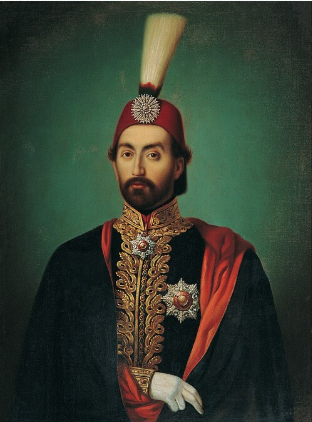
Sultan Abdülmecid hosting Franz Liszt in Istanbul and Sultan Abdülaziz providing financial support for Richard Wagner’s theater project in Bayreuth serve as particularly striking examples.
Through Liszt, one can trace connections to the literary world of Paris, Marie Duplessis, Alexandre Dumas fils, and Giuseppe Verdi. Through Wagner, the network extends to Friedrich Nietzsche, German nationalism, antisemitism, and the political utilization of Bayreuth during the Hitler era.
However, a causal link should not be established among these relationships. Abdülmecid hosting Liszt or Abdülaziz sending funds to Bayreuth were not integral parts of Wagnerian antisemitism or subsequent Nazi culture. Rather, what is at play here is how the same network of cultural circulation acquired entirely different meanings across different periods and at the hands of different actors.
The Institutionalization of Western Music in the Ottoman Palace
Among the Ottoman sultans were composers who wrote works in traditional Ottoman music forms—Selim III being one of the most prominent examples. The innovation of the 19th century lay in the sultans' shift toward European harmony, polyphonic orchestration, piano repertoire, opera, marches, waltzes, and polkas.
Following Mahmud II’s abolition of the Janissary Corps in 1826, the Mehterhâne-i Hümâyun (Imperial Janissary Band), which was affiliated with the corps, was also closed down. It was replaced by the Mızıka-i Hümâyun (Imperial Ottoman Band), centered on Western-style military music performance. Nevertheless, the old mehter tradition did not vanish entirely. Some ensembles continued to operate in Istanbul and various regions of Anatolia for a time. In the institution's early phase, the French musician Manguel was appointed. Later, Giuseppe Donizetti, brought to Istanbul in 1828, structured Western music education and the palace band on a far more systematic footing.
During the reign of Mahmud II, Giuseppe Donizetti was offered a post at the Ottoman palace to establish a Western-style palace and army band. Appointed as the General Instructor of the Mızıka-i Hümâyun in 1827, Donizetti arrived in Istanbul in the autumn of 1828. The elder brother of the famous opera composer Gaetano Donizetti, Giuseppe Donizetti became known as "Donizetti Pasha." He played a crucial role in training Western-style military bands, teaching music to members of the royal court, and advancing the Mızıka-i Hümâyun. Ultimately, Donizetti became one of the key architects of the new musical order in the Ottoman palace.

The turn toward Western music forged a new auditory landscape for the new army, updated court ceremonies, and the state’s visibility across Europe. Marches, orchestras, and palace concerts were transformed into instruments representing modern monarchy.
During the reign of Abdülmecid, Western musical activities around the court acquired an increasingly cosmopolitan character. European musicians who settled in or temporarily visited Istanbul, Levantine music circles, foreign embassies, businesses trading in sheet music and pianos, and the Naum Theatre in Pera created a dynamic musical circulation between the palace and Beyoğlu. While several European musicians working at the Naum Theatre subsequently entered palace service, prominent European virtuosos also gave concerts in Istanbul. Franz Liszt’s arrival in Istanbul in 1847 stood out as one of the most remarkable examples of this cultural atmosphere.
Liszt’s Journey to Istanbul
Franz Liszt arrived in Istanbul on June 8, 1847, aboard a steamboat from Galatz. At the port, he was received by Baron Resta, Sultan Abdülmecid’s chief interpreter. Liszt’s arrival in Istanbul marked the fulfillment of a travel dream he had contemplated for years but had been unable to realize. It is evident that the Sultan wished to hear Liszt play and that court circles were involved in arranging the trip. However, the visit to Istanbul was also an extension of Liszt’s extensive European tour.
Liszt performed twice before Abdülmecid at Çırağan Palace. He also gave public and private concerts within Russian Embassy circles, in Pera’s salons, and on June 18, 1847, at the Franchini Salon in Büyükdere, Istanbul. Although contemporary posters and press reports definitively document certain performances, there is no universally agreed-upon, exhaustive list of all his concerts. The most reliable statement based on archival documents is that Liszt played twice in the presence of the Sultan and gave a series of public and private concerts.

While in Istanbul, Liszt also met with Donizetti Pasha. A letter written by Giuseppe Donizetti to his son on June 9, 1847, reveals that Liszt visited him and requested the sheet music for two marches composed for the Sultan. Liszt then crafted a piano paraphrase based on the Mecidiye March, freely developing and embellishing the melody. Thus, an official march produced at the Ottoman court entered the repertoire of one of Europe’s most famous piano virtuosos. The piece was later published under the title Grande paraphrase de la marche de Donizetti composée pour Sa Majesté le Sultan Abdul-Medjid Khan.
Abdülmecid honored Liszt with an Order of Glory (Iftihar Nişanı), a jewel-encrusted box, and a financial award. These gifts demonstrated that the dynamics of patronage and prestige established between European monarchs and artists had also been adopted by the Ottoman court. After leaving Istanbul, Liszt warmly noted Sultan Abdülmecid’s hospitality and the gifts bestowed upon him in a letter dated July 17, 1847, addressed to Marie d’Agoult.

Liszt’s visit was not an isolated encounter between a celebrated European virtuoso and an Ottoman ruler. From the 1830s onward, Istanbul had become a recurring destination within the international market for professional musicians. The English harpist Elias Parish Alvars performed before Mahmud II in 1832, the Austrian pianist Leopold de Meyer appeared before Abdülmecid in 1842, and the Belgian violinist Henri Vieuxtemps gave a court concert and inspected the Mızıka-i Hümâyun in 1848. Eugène Léon Vivier followed in 1852, while Henryk Wieniawski performed privately for Abdülaziz in 1869. At the same time, Italian conductors such as Angelo Mariani and Luigi Arditi accepted professional engagements with Istanbul’s opera institutions. These were not disconnected episodes of courtly curiosity. They demonstrate that the Ottoman capital had become a professional node through which virtuosos, conductors, repertories, theatrical companies, and systems of royal patronage circulated across nineteenth-century Europe and the Mediterranean.
Liszt’s arrival in Istanbul coincided with the period immediately following a personal loss in his life.
From Marie Duplessis to The Lady of the Camellias
Marie Duplessis (born Alphonsine Plessis) died of tuberculosis in Paris on February 3, 1847, at the age of twenty-three. As one of the most prominent demi-monde figures of 19th-century Paris, Duplessis was not merely a courtesan associated with wealthy men. She was well known in the artistic, literary, and salon circles of Paris, sharing the same social spaces with authors, musicians, and aristocrats.
In later years, various romanticized stories were crafted about the relationship between Liszt and Duplessis. Liszt’s own accounts leave no doubt that he felt a strong emotional connection toward her. However, not all narratives regarding the nature and details of their relationship are equally reliable. Liszt received the news of Duplessis’s death while in Lemberg and expressed his grief in a letter to Marie d’Agoult dated May 1, 1847.
Another lover of Duplessis was Alexandre Dumas fils, the son of the famous novelist Alexandre Dumas. Their relationship lasted approximately eleven months. Drawing on his experiences after her death, Dumas fils wrote the novel La Dame aux camélias (The Lady of the Camellias), which was published in 1848.
Duplessis and the novel's protagonist are not the same person. Marie Duplessis was a historical figure, whereas Marguerite Gautier was a literary character inspired by her. Through the character of Armand Duval—who can be considered his literary alter ego—Dumas fils reshaped his own experiences within a fictional framework. Thus, the work became not a direct record of the real-life relationship between Dumas and Duplessis, but rather its literary transformation.
Dumas fils also adapted the novel into a play, which was staged in Paris in 1852. After Giuseppe Verdi likely attended a performance of this theatrical adaptation, Francesco Maria Piave drafted the libretto that formed the foundation of the opera La traviata. In the opera, Marguerite Gautier was transformed into Violetta Valéry, and Armand Duval into Alfredo Germont. The opera premiered at the Teatro La Fenice in Venice in 1853.
The life of Marie Duplessis, who died young in Paris, was brought to the novelistic and theatrical realm through Dumas fils, and to the global opera repertoire through Verdi. Meanwhile, Liszt, who had been in a relationship with Duplessis, was performing Donizetti Pasha’s Ottoman march in the presence of Sultan Abdülmecid roughly four months after her death. Istanbul, Paris, Milan, and Venice had virtually become different stops along the very same network of cultural circulation.
The Family Connection Linking Liszt to Wagner
Liszt’s daughter, Cosima Liszt, first married the pianist and conductor Hans von Bülow, one of Liszt’s students. While still married, Cosima began a relationship with Richard Wagner. Following her divorce from von Bülow, Cosima and Wagner married in 1870, making Liszt Richard Wagner’s father-in-law.
Wagner sought to develop a comprehensive system of thought on art, German identity, mythology, revolution, and society. At the core of his artistic philosophy was the concept of the Gesamtkunstwerk—or the "total work of art"—which unified music and drama. However, there was also a dark side to Wagner’s cultural vision.
In 1850, Wagner published a text titled Das Judenthum in der Musik (Jewishness in Music) under a pseudonym, which he later expanded and republished under his own name in 1869. He accused Jewish musicians of being unable to creatively participate in German culture, basing his aesthetic evaluations of music on ethnic origin. Wagner’s antisemitism was not a concept attributed to him posthumously. It was explicitly evident in the texts he published himself. Cosima Wagner was likewise a German nationalist who shared these antisemitic views, playing an influential role in shaping the ideological identity of the Bayreuth circle.
Wagner’s grand project was to build a dedicated festival theater where his works could be staged according to his vision. The location chosen for this endeavor was Bayreuth. Realizing the project required substantial financial resources, leading Wagner and his circle to begin gathering support from European monarchs, aristocrats, and wealthy patrons.
It was precisely at this point that an Ottoman sultan entered the scene.
Sultan Abdülaziz’s Support for Bayreuth
In 1872, Sultan Abdülaziz purchased ten certificates—known as Patronat-Scheine—issued for the construction fund of the Bayreuth Festspielhaus. Each certificate was valued at 300 thalers. In total, the Ottoman sultan provided 3,000 thalers in financial support to the Bayreuth project.

The certificates were signed by Wagner on September 23, 1872, and were issued to "Seine Majestät der Sultan zu Konstantinopel" (His Majesty the Sultan at Constantinople). Three of these remain in the Richard Wagner Archive in Bayreuth today, while one is housed at the Stanford University Library. These certificates were not merely donation receipts; they also served as invitations to the premiere of Der Ring des Nibelungen, which was to take place in 1876.
In a letter written to Princess Carolyne zu Sayn-Wittgenstein on November 19, 1872, Liszt praised Abdülaziz's support of 3,000 thalers. He found the Ottoman sultan’s purchase of ten certificates particularly remarkable at a time when the German Empress and various members of German dynasties hesitated to support the project. While Liszt commended Abdülaziz’s backing, Wagner’s reaction was somewhat different. In her diary entry dated September 19, 1872, Cosima Wagner recorded that the news of the Sultan purchasing ten patronage certificates brought Wagner little satisfaction, as it "hurt the pride of German enterprises."
In Istanbul, no opera by Wagner was fully staged during the composer’s lifetime. The support was provided within the framework of the patronage system established to finance the Bayreuth Festspielhaus. Influential patrons around Wagner, such as Marie von Schleinitz, played a significant role in promoting this system across European courts and aristocratic circles. However, there is no documentary evidence indicating that Schleinitz directly mediated Abdülaziz’s contribution.
Abdülaziz’s contribution to Bayreuth cannot be evaluated entirely in isolation from the transregional philanthropic and patronage initiatives of Ottoman rulers. For instance, Sultan Abdülmecid donated £1,000 in 1847 to the victims of the Great Irish Famine. Research indicates that this aid should be understood not only through the lens of personal compassion, but also within the broader context of Ottoman-British relations, European public opinion, and royal image-making. Nevertheless, the Irish donation—being humanitarian in nature—does not prove that Abdülaziz’s support for Bayreuth carried a direct diplomatic intent. Therefore, the decision regarding Bayreuth can best be interpreted as an initiative where the sultan’s personal interest in music intersected with international royal patronage.

Abdülaziz’s engagement with music was not limited to diplomatic donations. He played the piano and took an interest in both Ottoman music and Western salon music, composing works in Western forms such as Invitation à la Valse and La Gondole Barcarolle. The publication of these compositions by the Francesco Lucca publishing house in Milan demonstrates that the sultan was directly connected to the European music market. Lucca also held the publishing rights to some of Wagner’s works in Italy. Thus, the compositions of the Ottoman sultan and the music of Wagner circulated within the very same European publishing world.
Abdülaziz is considered the first Ottoman sultan to compose works in Western forms. He took Western music and piano lessons at the Ottoman court from the Italian musician Callisto Guatelli (1819–1899), known in the court as Guatelli Pasha. Guatelli, who also served in the leadership of the Mızıka-i Hümâyun, composed the Aziziye March in honor of the sultan. Murad V, who later ascended the throne, engaged with Western music far more intensively than Abdülaziz. A pianist and composer himself, Murad V composed numerous works in European forms such as waltzes, polkas, mazurkas, galops, quadrilles, and marches. A surviving 160-leaf piano notebook contains 89 named compositions. His use of techniques specific to Western music—such as tonal harmony, modulation, chord progressions, trios, codas, and Da capo al fine—demonstrates that Murad V was not merely imitating the European musical language, but employing it on the foundation of structured education and technical knowledge. Although Murad V’s reign lasted only ninety-three days, he continued composing during his long years under surveillance at Çırağan Palace. Thus, the Ottoman court’s relationship with Western music evolved from listening to foreign artists to dynasty members themselves creating works in Western forms.
Nietzsche’s Admiration for Wagner and Their Rift
One of the most significant thinkers to enter Richard Wagner’s circle was Friedrich Nietzsche. Published in 1872, Die Geburt der Tragödie (The Birth of Tragedy) was dedicated to Wagner. Nietzsche linked his hopes for the rebirth of Ancient Greek tragedy to Wagner’s music.
In 1876, Nietzsche published Richard Wagner in Bayreuth. Although printed as a standalone book, it was the fourth essay in his Unzeitgemässe Betrachtungen (Untimely Meditations). In this text, Wagner was presented as an exceptional artist capable of transforming German culture.
Nietzsche knew the Wagner family intimately and was well aware of the ideas circulating in Bayreuth. The eventual rift between Nietzsche and Wagner was gradual and multifaceted. Wagner’s intensifying German nationalism, the cult of personality around him, cultural chauvinism, his antisemitic supporters, and the Christian redemption theology that became particularly explicit in Parsifal gradually alienated Nietzsche.
Nietzsche’s dedication of his 1878 work Menschliches, Allzumenschliches (Human, All Too Human) to the French Enlightenment philosopher Voltaire was a conscious move against the German nationalism of the Wagner circle. In works such as Der Fall Wagner (The Case of Wagner) and Nietzsche contra Wagner, Nietzsche criticized the man he had once deeply admired—not only on musical grounds, but as a representative of cultural decadence, theatrical ostentation, German nationalism, and Christian redemption.
Nietzsche despised the organized antisemitic movements of his time and reacted strongly when his sister Elisabeth married the antisemitic Bernhard Förster. Even so, it would be inaccurate to present Nietzsche as a thinker completely free of anti-Jewish tropes; certain problematic historical and cultural generalizations about Judaism appear in some of his writings. As Robert C. Holub’s work demonstrates, a distinction must be drawn between Nietzsche’s opposition to antisemitic political movements and his use of certain anti-Jewish conceptual patterns. However, this complexity does not make Nietzsche a philosopher of Nazi racism.
Nietzsche’s Übermensch and the Nazi Distortion
Nietzsche’s concept of the Übermensch is fundamentally distinct from the biological or racial concept of the "master race" found in Nazi ideology. In Nietzsche’s thought—most notably in Also sprach Zarathustra (Thus Spoke Zarathustra)—the Übermensch emerges within the context of self-overcoming and the creation of one's own values. The concept does not denote the dominance of a German race, nation, or biological group over other communities.
Nietzsche explicitly criticized German nationalism, state-worship, mass politics, and antisemitic movements. Therefore, equating his philosophy with Hitler’s ideology is historically untenable. Nevertheless, Nazi ideologues ripped concepts such as the Übermensch, the will to power (Wille zur Macht), master morality (Herrenmoral), slave morality (Sklavenmoral), and the herd man (Herdenmensch) from their contexts, inserting them into a racial and militaristic narrative.
Nietzsche’s sister, Elisabeth Förster-Nietzsche, played a pivotal role in this transformation. Elisabeth was a staunch German nationalist and an antisemite. Together with her husband Bernhard Förster, she attempted to establish an all-German colony in Paraguay named "Nueva Germania," founded on notions of racial purity. The venture failed, and Bernhard Förster committed suicide in 1889.
Following Nietzsche’s mental collapse, Elisabeth established extensive control over her brother’s manuscripts and published legacy. She founded the Nietzsche Archive, selectively edited and published his letters and notes, altered the context of certain texts, and attempted to portray her brother as far closer to German nationalism than he actually was. The compilation of unpublished notes into the book titled Der Wille zur Macht (The Will to Power) was part of this editorial manipulation.
Attributing the Nazi interpretation of Nietzsche solely to Elisabeth is insufficient, however. The Bayreuth circle, nationalist publishers, Nazi cultural politicians, and selective readings tailored to ideological needs all played a role. While Elisabeth’s interventions were significant, a much broader cultural and political mechanism ultimately facilitated the appropriation of Nietzsche in Nazi Germany.
An intriguing detail regarding Nietzsche’s early intellectual development is that his aunt Rosalie gave him a biography of Alexander von Humboldt for his fifteenth birthday. Biographical literature notes that this book nurtured the young Nietzsche’s curiosity for knowledge and learning. Nevertheless, it would be incorrect to suggest that his intellectual life began with this book; Nietzsche was already writing poetry, composing music, and engaging deeply with religion, Ancient Greece, and classical literature prior to receiving it.
From the Wagner Family to Hitler’s Bayreuth
Richard Wagner died in 1883. Following his death, Cosima Wagner assumed the management of the Bayreuth Festival, becoming the guardian not only of Wagner’s musical legacy but also of his ideological one. Within the Bayreuth circle, German nationalism, antisemitism, and the Wagner cult converged increasingly. Cosima and Richard Wagner’s son-in-law, Houston Stewart Chamberlain (husband of their daughter Eva), was also instrumental in this process; his racial and antisemitic theories exerted a profound influence on National Socialist circles.
Hitler’s first contact with the Wagner family occurred in Bayreuth in September 1923. The family member who formed the closest bond with Hitler was Winifred Wagner, the wife of Richard Wagner’s son, Siegfried Wagner. From 1923 onward, Winifred was a close friend and supporter of Hitler, remaining in contact with him during his imprisonment in Landsberg. After Siegfried’s death in 1930, she took over the management of the Bayreuth Festival.
Once Hitler came to power, he became a regular guest of the Wagner family and the Bayreuth Festival. The festival received state funding and was transformed into one of Nazi Germany’s primary venues for cultural representation. Decades after the composer’s death, Wagner’s works were utilized as aesthetic material for German national mythology, the leadership cult, and Nazi politics. However, establishing an automatic identity between Wagner’s music, his family, his personal antisemitism, and its usage during the Nazi era obscures historical complexity. As David B. Dennis emphasizes, the name "Wagner" in this context represents a multi-layered phenomenon that simultaneously denotes the composer, his works, his family, the institution of Bayreuth, and the political legacy constructed ex post facto.
Cultural Circulation, Not Mere Westernization
When all these relationships are viewed together, explaining the Ottoman court's turn toward Western music as a one-sided act of cultural imitation proves wholly inadequate. Istanbul was not a passive capital merely importing European music. While Donizetti Pasha was establishing new musical institutions at court, Liszt was introducing an Ottoman march into the European piano repertoire. Abdülaziz’s waltzes were being published in Milan while the same sultan was contributing to the construction of Bayreuth.
Furthermore, Verdi’s works reached Istanbul from Europe’s cultural centers with astonishing speed. Il trovatore premiered at the Naum Theatre on November 18, 1853—just ten months after its world premiere in Rome on January 19, 1853. Macbeth met Istanbul audiences approximately a year and a half after its world premiere in Florence. These short time intervals demonstrate that, in the mid-19th century, Istanbul was not on the periphery of European opera circulation, but rather served as one of its connected hubs within international networks.

In Istanbul’s French-language press—particularly in the newspaper La Turquie—articles were published advocating for Wagner’s music against the dominance of Italian opera and Verdi in the city. The pro-Wagner campaign initiated in 1869 by Émile Julliard, one of the newspaper's managers, demonstrates how the aesthetic debate between the Italian and German schools was reflected in the press within Istanbul’s musical circles.
Within this network, the sultans acted as patrons who commissioned works, bestowed decorations, hosted international artists, and composed pieces in Western forms themselves. The examples of Abdülaziz and Murad V illustrate that the Ottoman dynasty’s relationship with Western music progressed beyond the level of representation and consumption to one of active creative production.
This very same network could transform the life of Duplessis into a universal tragedy through literature and opera, bring an Ottoman sultan and a Hungarian virtuoso together, and lay the groundwork for the formation of a nationalist and antisemitic cultural sphere around Wagner. Nietzsche had initially entered this sphere with immense admiration, only to distance himself later by opposing Wagner’s nationalist, religious, and antisemitic turns. Decades after his death, Nietzsche’s philosophy would be reshaped by his sister, nationalist publishing circles, and Nazi cultural politics.
In the 19th century, music forged an international sphere of circulation that interconnected royal courts, artists, publishers, lovers, novelists, philosophers, and political movements. In this space extending from Istanbul to Paris, and from Milan to Bayreuth, cultural modernization and political ideology, personal relationships and state diplomacy, and aesthetic creativity and power were inextricably linked.
Ultimately, the Ottoman sultans’ turn toward Western music was an active participation by the court in Europe’s broader networks of cultural exchange and patronage.


Comments