
The Boundaries of Enlightenment Universalism

The language of constitutional government, scientific inquiry, freedom of conscience, religious toleration, and universal rights owes much to eighteenth-century philosophy. More than any other intellectual movement of the modern era, the Enlightenment claimed that reason could discover principles valid not merely for particular nations or religions but for humanity itself. Universalism became one of its defining aspirations. It has also become one of its greatest controversies.
Over the past several decades, historians and political theorists have increasingly challenged the traditional image of the Enlightenment as a straightforward story of progress. They have pointed to the fact that several of its most celebrated philosophers defended racial hierarchies, justified aspects of European colonial expansion, or denied equal intellectual capacities to non-European peoples.
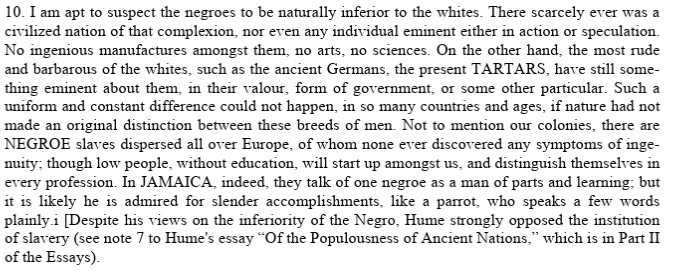
David Hume wrote that he was "apt to suspect the negroes to be naturally inferior to the whites." Immanuel Kant developed a theory of race that attributed different natural capacities to different human groups. Voltaire, despite his enduring reputation as a champion of religious toleration, repeatedly described Africans in terms implying natural inferiority. These statements cannot be dismissed as isolated remarks or products of careless language. They formed part of the published works of some of the Enlightenment's most influential thinkers.
The same intellectual movement also produced some of the earliest systematic philosophical attacks on slavery, colonial domination, and inherited privilege. Condorcet argued that no human being could legitimately become the property of another. Denis Diderot questioned the moral foundations of European empire. Johann Gottfried Herder rejected attempts to rank civilizations according to a single historical scale and insisted that every culture should be understood within its own historical context. These thinkers were not critics standing outside the Enlightenment. They were participants in the same intellectual conversation.
Over the past several decades, a substantial body of scholarship has challenged the traditional understanding of the Enlightenment as an unambiguously emancipatory movement. Thinkers associated with postcolonial theory, decolonial thought, and critical race theory argue that the Enlightenment's universalism was never genuinely universal. Rather, they contend that its language of reason, civilization, and progress often functioned to legitimize European imperial expansion, colonial domination, and racial hierarchy. Charles W. Mills, for example, argues that the modern social contract was historically accompanied by an implicit "racial contract" that excluded non-Europeans from the community of equal persons. Walter D. Mignolo similarly maintains that the universal claims of the Enlightenment were inseparable from the "coloniality of power," through which European knowledge presented itself as universally valid while marginalizing other intellectual traditions. From this perspective, racism and empire were not unfortunate inconsistencies within Enlightenment thought but structural features of its universalist project.

Other historians reject this interpretation as one-sided. They argue that identifying the Enlightenment primarily with colonialism and racial hierarchy neglects the intellectual transformations that made many modern democratic societies possible. Constitutional government, the separation of political and religious authority, freedom of conscience, the expansion of scientific inquiry, and the emergence of the language of universal rights all developed within, or were profoundly influenced by, Enlightenment thought. Anthony Pagden, for example, argues that the Enlightenment represented the first sustained attempt to construct a political and moral order based upon principles applicable to humanity as a whole rather than to particular dynasties, religions, or nations. From this perspective, the racist views expressed by some Enlightenment philosophers should be understood as serious contradictions within the movement rather than as evidence that universalism itself was merely an ideological disguise for empire. Steven Pinker similarly contends that many of the moral advances associated with modernity—including the expansion of civil liberties, humanitarianism, and human rights—owe a substantial intellectual debt to Enlightenment values of reason, science, and universal humanism.
Both perspectives illuminate important aspects of the historical record. The first reminds us that universal language has often coexisted with exclusion, domination, and empire. The second rightly emphasizes that the Enlightenment also generated powerful intellectual resources for criticizing arbitrary authority, slavery, religious persecution, and inherited privilege. Yet neither perspective fully explains the movement's central paradox. If Enlightenment universalism was inherently exclusionary, how do we account for Condorcet, Diderot, and Herder? Conversely, if the Enlightenment was fundamentally a project of universal emancipation, how should we understand the explicit racial hierarchies defended by Hume, Kant, and Voltaire? The historical evidence resists both reductionist interpretations.
The question is not whether some Enlightenment philosophers were racist. That fact is beyond serious dispute. Nor is the question whether the Enlightenment transformed modern political and intellectual life. It undoubtedly did. The more difficult question is how both realities could emerge from the same intellectual movement.
This essay argues that the problem cannot be understood by treating Enlightenment universalism as a single idea. Eighteenth-century philosophers agreed that some principles possessed universal validity, but they disagreed profoundly about what those principles were and where their universality began and ended. Some regarded scientific knowledge as universal while denying equal human capacities. Others defended universal morality yet accepted civilizational hierarchy. Still others insisted that humanity itself was universal without believing that history moved toward a single model of civilization. The Enlightenment therefore did not produce one universalism but several competing conceptions of it.
Understanding those competing conceptions offers a different way of approaching one of the Enlightenment's most enduring controversies. Rather than asking whether the Enlightenment was fundamentally emancipatory or oppressive, we should ask a more precise philosophical question: where did Enlightenment thinkers draw the boundaries of the universal? That question provides the key to understanding both the achievements and the contradictions of the modern Enlightenment tradition.
The Paradox of Universalism
The Enlightenment's commitment to universal principles did not produce a single understanding of humanity. Some of its greatest philosophers defended principles they believed applicable to all rational beings while simultaneously denying equal intellectual or moral standing to entire groups of people. Others, drawing upon the same intellectual tradition, reached the opposite conclusion and condemned slavery, colonial domination, and racial hierarchy. The paradox therefore lies not simply in the coexistence of universalism and racism, but in the fact that both emerged from the same intellectual movement.
David Hume provides one of the clearest examples. In Of National Characters, he famously declared that he was "apt to suspect the negroes to be naturally inferior to the whites," arguing that the absence of distinguished achievements in science, government, and the arts pointed to "an original distinction" between the races. The statement is remarkable because it appears in the work of a philosopher who sought universally valid principles of human nature. Here, universal explanation did not lead to universal equality.
Immanuel Kant, whose moral philosophy remains one of history's most influential defences of universal moral law, likewise argued that humanity consisted of distinct races possessing different natural capacities. Voltaire, despite his lifelong campaign against religious intolerance and fanaticism, repeatedly described Africans in terms suggesting natural inferiority. These were not obscure private opinions. They appeared in published works by thinkers whose ideas helped shape the modern understanding of liberty, reason, and universal rights.
The Enlightenment also produced voices that rejected these conclusions. Condorcet argued that no human being could legitimately become the property of another and treated slavery as a fundamental violation of universal justice. Diderot questioned the moral legitimacy of European colonialism, insisting that military or technological superiority conferred no right to dominate other peoples. Herder rejected attempts to rank civilizations according to a single historical scale, arguing instead that every people should be understood within its own historical and cultural context.
The contrast is striking. Hume, Kant, Voltaire, Condorcet, Diderot, and Herder all spoke the language of universality. Yet they understood that language in profoundly different ways. The question, therefore, is not whether the Enlightenment believed in universal principles. It is why philosophers sharing that commitment drew radically different boundaries around the community to which those principles applied. That question lies at the heart of the Enlightenment's most enduring paradox.
Why Did the Paradox Exist?
The simplest explanation is hypocrisy. Enlightenment philosophers proclaimed universal principles but failed to apply them consistently. There is undoubtedly some truth in this interpretation. Hume's remarks on Africans sit uneasily beside his search for universal principles of human nature. Kant's theory of race appears difficult to reconcile with the moral equality implied by the categorical imperative. Judged by modern standards, these tensions are impossible to ignore. Yet hypocrisy alone cannot explain the historical record.
If inconsistency were the whole story, it would be difficult to understand why other Enlightenment thinkers, working within the same intellectual climate, reached precisely the opposite conclusions. Condorcet condemned slavery not despite his commitment to universal reason but because of it. Diderot criticized colonial domination by appealing to the very principles of justice and human dignity that other philosophers employed more selectively. The same intellectual movement generated radically different moral conclusions.
Historical context offers a second explanation. Eighteenth-century Europe was deeply embedded in colonial expansion, the Atlantic slave trade, and emerging theories of racial classification. Philosophers wrote within societies in which empire was expanding and European encounters with Africa, Asia, and the Americas were increasingly interpreted through assumptions of civilizational superiority. It would be surprising if these developments had left no trace on Enlightenment thought.
Context, however, explains why racial ideas became widespread. It does not explain why philosophers responded to them differently. If historical circumstances alone determined intellectual conclusions, neither Condorcet's abolitionism nor Herder's rejection of civilizational hierarchy would be intelligible. They inhabited the same century, read many of the same texts, and confronted many of the same political realities.
The paradox cannot be reduced either to personal inconsistency or to historical circumstance. The Enlightenment was not divided between philosophers who believed in universalism and those who rejected it. Almost all of them claimed to defend universal principles. Their disagreement lay elsewhere. They disagreed about what could legitimately be regarded as universal and, more fundamentally, about who belonged within the community to which those universal principles applied.
That disagreement shaped the Enlightenment far more profoundly than the familiar opposition between reason and prejudice. It was not a dispute over whether humanity possessed universal moral significance. It was a dispute over how that humanity should be understood. Once the problem is framed in this way, the Enlightenment appears less as a unified intellectual movement than as an argument about the meaning and limits of universality itself.
Universalism Is Not One Idea
Modern discussions of the Enlightenment often speak of "universalism" as though it were a single philosophical doctrine. The historical record suggests otherwise. Enlightenment thinkers agreed that some principles possessed universal validity, but they disagreed fundamentally about what those principles were. Scientific knowledge, moral obligation, political legitimacy, historical progress, and civilization were all described as universal by different philosophers, yet these claims were neither identical nor mutually dependent.
This distinction helps explain the paradox. A philosopher could believe that the laws of nature were universally valid without believing that all human beings possessed equal intellectual capacities. Another could defend universal moral obligations while regarding European civilization as the highest stage of historical development. A third could accept universal humanity yet reject the idea that history moved toward a single model of civilization. All three positions claimed the language of universality, but they attached it to different objects.
The Enlightenment's contradictions arose not because universalism necessarily produced exclusion, but because universalism itself remained contested. There was no agreement about where universality ended and historical or cultural difference began. Hume transformed an historical observation into a claim about human nature. For Kant, universal morality coexisted with a hierarchical anthropology. By contrast, Condorcet concluded that universal justice made slavery indefensible, while Herder argued that the common humanity of all peoples required respect for cultural diversity rather than their measurement against a single civilizational standard.
Seen from this perspective, the Enlightenment was not divided between universalists and particularists. It was divided among competing universalisms. The real disagreement concerned the boundaries of the universal itself. Once that distinction is recognized, the movement's achievements and failures appear less as a single coherent legacy than as the outcome of an unresolved philosophical debate whose consequences continue to shape contemporary discussions of human rights, globalization, multiculturalism, and international order.
The Enlightenment's Unfinished Debate
This distinction remains important because the Enlightenment continues to shape the language of modern political life. Democracy, constitutionalism, scientific inquiry, human rights, and international law all rest upon some form of universal claim. Yet contemporary debates often assume that universal principles necessarily require universal institutions, universal historical trajectories, or universal cultural norms. That assumption deserves closer examination.
There is an important difference between affirming the universality of human dignity and insisting upon the universality of a particular civilization. Likewise, recognizing the universal validity of scientific knowledge does not imply that every society must follow the same historical path or adopt identical political institutions. These are different philosophical claims, although they are frequently treated as if they were one.
The Enlightenment itself demonstrates why this distinction matters. Hume, Kant, Voltaire, Condorcet, Diderot, and Herder all appealed to universal principles, yet they reached profoundly different conclusions about race, empire, history, and cultural diversity. Their disagreement reminds us that universalism is not self-interpreting. Every claim to universality raises a further question: universal in what respect, and for whom?
Recognizing this complexity neither condemns nor absolves the Enlightenment. It allows us to distinguish between those universal principles that seek to protect the equal dignity of human beings and those that claim universal authority for particular historical experiences, institutions, or civilizations. The failure to maintain this distinction has repeatedly transformed universal ideals into instruments of exclusion.
The Enlightenment's greatest legacy may not lie in the answers it offered but in the questions it left unresolved. Its philosophers bequeathed the modern world a language of universal rights, universal justice, and universal humanity. They also left behind an enduring debate over the limits of those universals—a debate that remains as politically and philosophically significant today as it was in the eighteenth century.
Conclusion
The Enlightenment cannot be understood either as the birthplace of universal human emancipation or as the intellectual origin of modern racism. It was both more ambitious and more contradictory than either characterization suggests. Its philosophers transformed the language of politics by insisting that reason could discover principles valid beyond tradition, religion, and inherited authority. Yet they profoundly disagreed about the community to which those principles applied.
That disagreement explains why the same intellectual movement produced Hume's defence of racial hierarchy and Condorcet's condemnation of slavery, Kant's universal moral philosophy and Herder's rejection of civilizational ranking, Voltaire's religious toleration and his prejudices toward non-European peoples. These positions were not simply personal inconsistencies. They reflected competing understandings of the scope of universal principles.
Contemporary debates often ask the wrong question. The issue is not whether the Enlightenment was universalist. It unquestionably was. The more revealing question is what Enlightenment thinkers believed could legitimately claim universality and where they drew the boundaries of the universal community.
The Enlightenment's greatest legacy lies not in a settled doctrine but in an unresolved argument. Its universal aspirations transformed modern political thought, while its exclusions revealed the limits of those aspirations. Understanding both dimensions is essential—not to defend the Enlightenment or to condemn it, but to understand it.
One further question remains, however, and it extends beyond the scope of this essay. Modern readers often assume that universalism, humanism, and human equality are inseparable concepts. Yet the evidence examined here suggests that several leading Enlightenment philosophers who spoke the language of universal reason and humanity also defended explicit theories of racial hierarchy. This raises a deeper philosophical question. What did Hume, Kant, and Voltaire actually mean by "humanity"? If they regarded all human beings as members of the same species while simultaneously attributing unequal natural capacities to different races, then their understanding of humanism may have differed fundamentally from the egalitarian conception that emerged in later centuries. Exploring the relationship between Enlightenment humanism and racial hierarchy therefore requires a separate investigation into the historical meaning of humanism itself.


Comments